Accounting and Bookkeeping Accounting and bookkeeping are the life line for every successful business. And though theory acts as a groundwork, the real-world application of that knowledge is what ultimately prepares them to manage their finances. From Theory to Practice: How Practical Bookkeeping & Accounting Courses Train Students with Real-World Skills investigates how applied learning transforms students into part of the confident, precise professionals who can juggle complex financial situations.
Theory Meets Practice
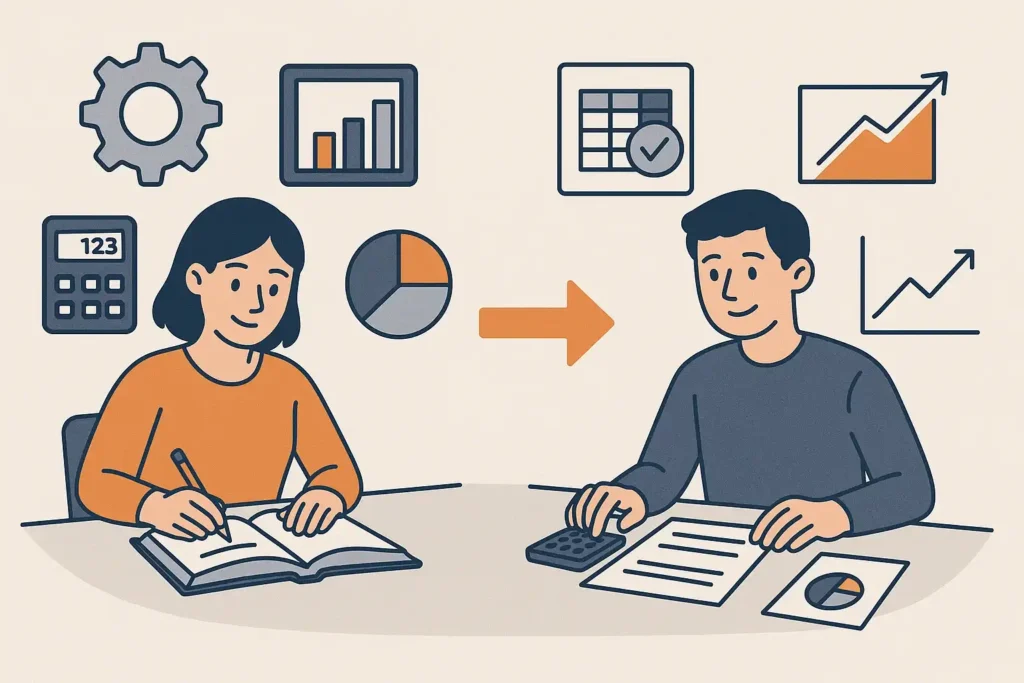
Students often get a place to start bookkeeping or accounting in a classroom setting. They are familiar with double-entry accounting, financial statements and accounting conventions. The difficulty is when you theory becomes reality. Applied courses are really intended to fill this gap–they give students some hands-on experience that wasn’t gained in the theory-laden classrooms. This kind of hands-on learning prevents students from just memorizing rules and regulations but allows them to know how these rules however, apply in real-world business situations.
Experiencing Real-World Scenarios
Real-world business simulations, from tackling accounts payable and receivable to generating financial reports and conducting audits, provide hands-on practice. Its use of case studies and simulations on businesses environments help to improve critical thinking and problem solving abilities. They learn about common situations such as budgeting, payroll processing and identifying financial irregularities that are likely to be encountered by all accounting professionals. This style of learning provides the students with the opportunity to make mistakes, to learn from them, and, most importantly, to be able to deal with such situations when they enter into industry.
Mastering Accounting Software and Tools
In the modern day digital world, knowledge of software is strong requirement. Some of the practicals would be on well-known platforms like QuickBooks(Tm), Tally(Tm), Xero(Tm) or SAP. When students learn to interact with these tools in a safe environment, they come to recognize how the products works, as well has its advantaged and constraints before leveraging them in actual business establishments. This literacy translates to job skills and develops competency in workforce applictions such as using a spreadsheet for managing important data, creating reports and supporting strategic decisions with reports.
Developing Analytical and Decision-Making Skills
In addition to just managing books and recording transactions, modern accounting is one that needs analytical thinking. Applied practicum focus on interpreting financial data, trend spotting and giving actionable insights. Through the preparation of actual financial statements and reports, students develop the skills necessary to evaluate a businesess financial health while supporting managerial decisions. These are the kind of invaluable analytics offered now, which help professionals not only move beyond routine bookkeeping duties but become true strategic partners in business expansion.
Building Professional Confidence
Developing a measure of professional confidence is one of the most critical benefits that practical bookkeeping and accounting courses offer. This type of use of real-world activities and group work provides students with practical knowledge that consolidates their theoretical understanding. Added: What You Need To Be Confident It works even better when you hit the job market or need to manage some financial responsibilities at work. The only candidates that hiring bodies really value are those who can show both practical competency and theory-based understanding – they make better employees, capable of tackling the challenges presented by shifting business climates.
Networking and Industry Exposure
Industry professionals may be guest speakers for projects, students may have internships and/or mentors. Exposure like this is what helps students learn what is going on in industry now, the best ways of doing things and the expectations. Networking professionally can open up job opportunities, partnerships and a clearer picture of how to pursue a career in accounting and finance. This real-world dynamic balances out the teaching-learning process, so neither one is only mere skill-based and lacks understanding of professional ethics and office culture.
Lifelong Skills Beyond the Classroom
The advantages of practical bookkeeping and accounting courses also go well beyond immediate employment. The experience gained from hands-on learning is transferable to any job and industry. Whether chairing accounts for a small business, employed in corporate accounting, or starting a new business endeavor the practical knowledge one can gain provides them with the knowledge to manage financial records properly, create appropriate reports based on structure provided by government regulations and make educated decisions towards finances. This life-long relevance reflects the value of experiential learning in designing efficient and flexible professionals.
Conclusion
From Theory to Practice: The Real-World Skills that Hands-On Accounting and Bookkeeping Courses Can Deliver depicts how learning-by-doing in accounting can be life-changing. And by linking theory to reality, these programs are training students who can meet real challenges with assurance of knowledge and expertise; they will also possess strategic intelligence. Whether you’re trying to make a name for yourself within financial departments as an outstanding bookkeeper or looking to access lucrative roles in accountancy, it’s clear that hands-on training is by no means just advantageous – if your career is ever going to take off and really thrive with momentum, on-the-ground experience isn’t optional- it’s absolutely necessary.
Experiential based courses aren’t just teachers – they teach students how to succeed in the real world, becoming financially literate and contributing to any organization with the knowledge, confidence, and questions necessary.